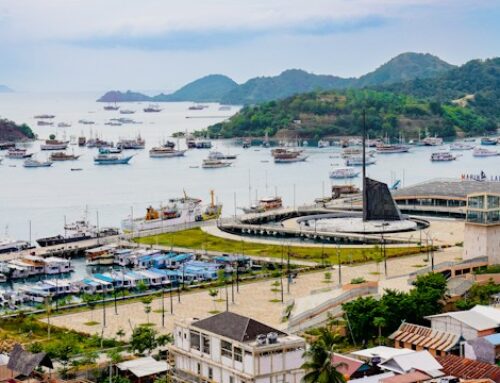
Coastal cities in Indonesia are increasingly experiencing complex and multi-dimensional flood risks shaped by the interaction of climate change, sea level rise, land subsidence, rapid urbanization, and institutional governance challenges. In many urban coastal settings, flooding has evolved from episodic disaster events into a persistent and slow-onset environmental stressor that gradually reshapes settlement patterns, infrastructure systems, socio-economic vulnerability, and long-term urban development trajectories (Egaputra et al., 2022; Saputra, 2020).
The governance of flood risk in coastal cities therefore cannot be understood solely through technical or engineering perspectives. Rather, it is deeply embedded in political processes, spatial planning regimes, and policy priorities that influence land-use decisions, infrastructure investments, environmental regulation, and adaptive capacity (Batubara et al., 2023; Belland et al., 2023; Siriwardane-de Zoysa et al., 2021).
Spatial planning plays a critical role in mediating flood risk by guiding urban expansion, regulating development in hazard-prone areas, and enabling long-term adaptation strategies. However, planning responses often remain reactive, fragmented, or constrained by political economy dynamics, limited data integration, and short-term development imperatives, which resulted in exposing coastal cities to flood risk rather than reducing it (Suroso & Firman, 2018). As climate-related risks intensify, coastal cities are increasingly required to transition toward more anticipatory and transformative adaptation approaches, including ecosystem-based adaptation, resilient infrastructure planning, and in some contexts, just and equitable managed retreat (IPCC, 2023; Wong et al., 2014).
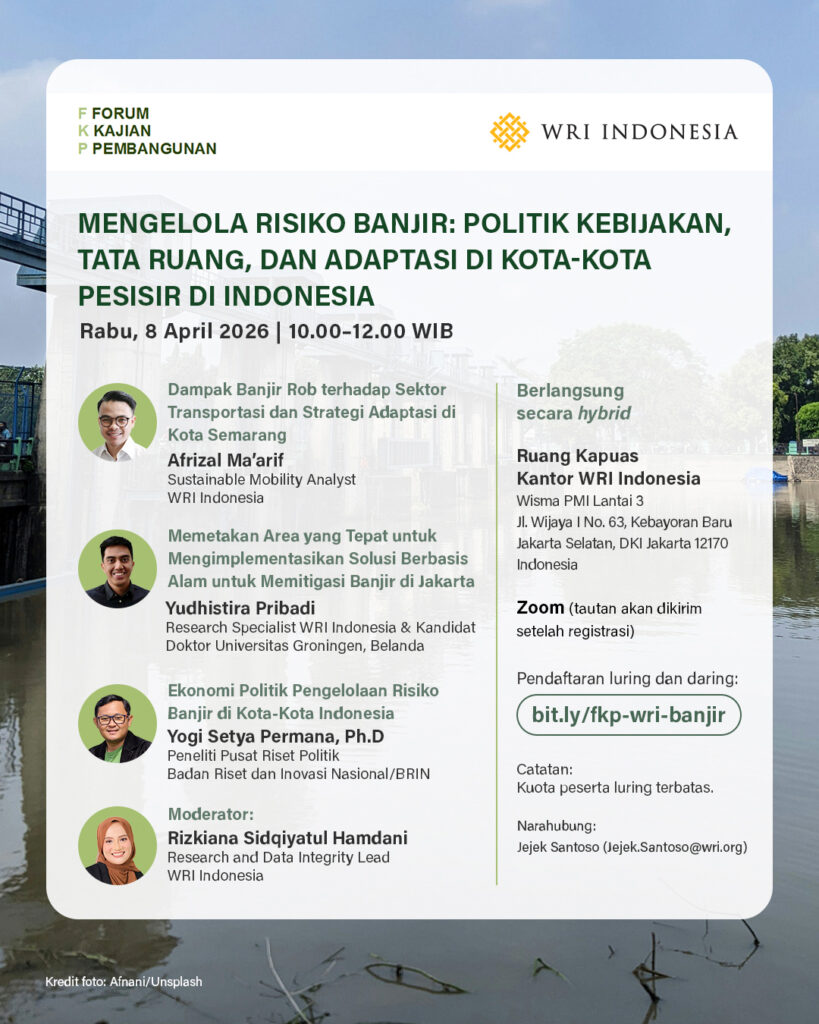
This seminar aims to facilitate an interdisciplinary dialogue on managing flood risk in Indonesia’s coastal cities through integrated perspectives on policy politics, spatial governance, and urban adaptation. By engaging policymakers, researchers, planners, practitioners, and civil society actors, the seminar seeks to advance evidence-based discussions and collaborative strategies to support more resilient, equitable, and adaptive coastal urban futures.
Yogi Setya Permana (BRIN)
Rabu, 8 April 2026 pukul 10.00-12.00 WIB (hybrid dalam Bahasa Indonesia)
Registrasi: klik di sini
Thumbnail photo : Iqro Rinaldi/Unsplash
Slides and video for past seminars: